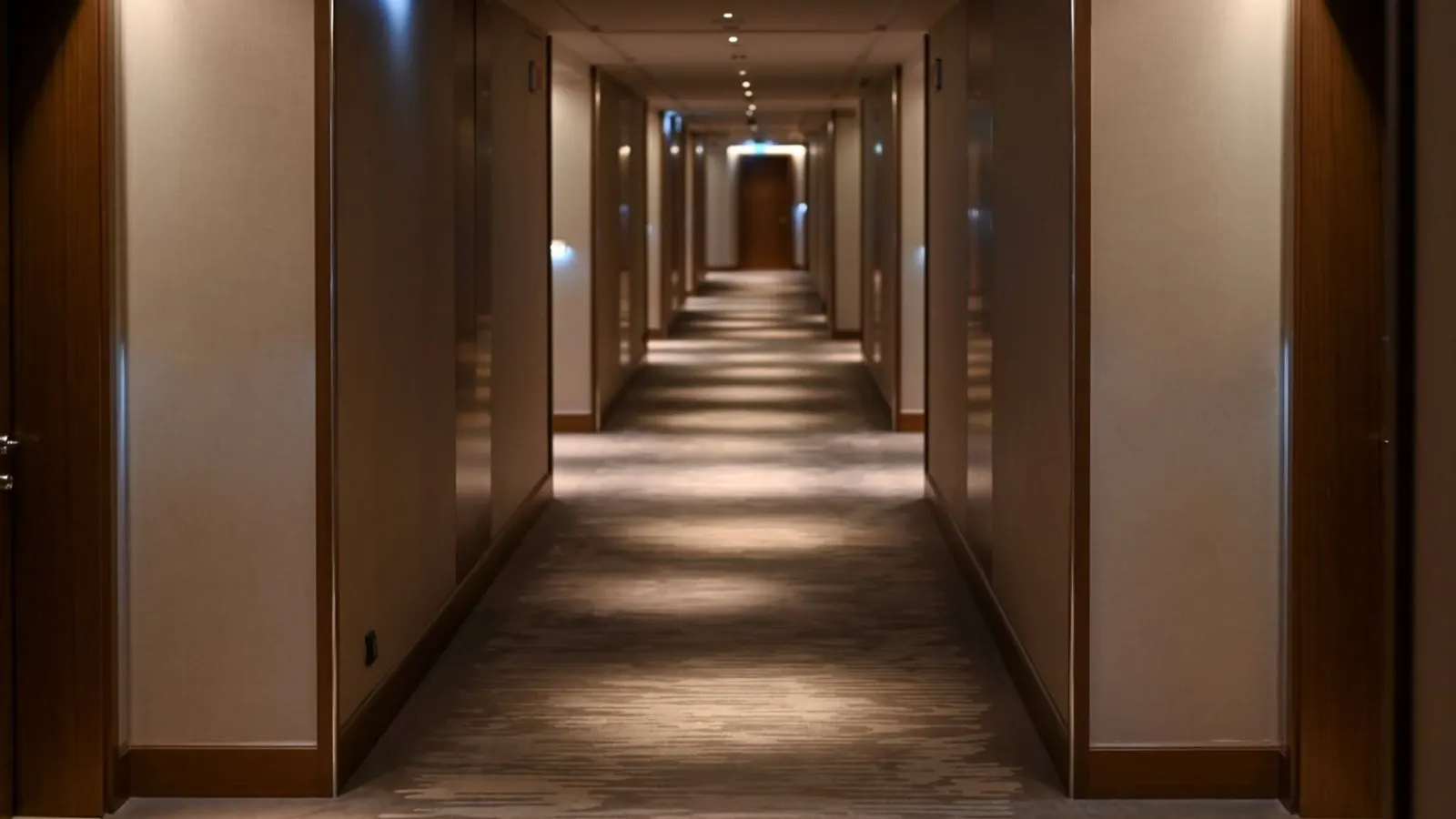
Hotel repainting without closing rooms sounds like a contradiction until you break the project down the way a hotel's own housekeeping department already thinks about it: room by room, floor by floor, never touching more inventory than can be sold that same night.
A hotel that blocks 20 rooms at once for a repaint isn't just losing revenue on those rooms, it's creating a scheduling problem for reservations, groups, and loyalty guests that takes weeks to untangle, and a general manager fielding front-desk complaints about paint smell in a room that was supposed to be ready. The fix is sequencing the work the way housekeeping already turns rooms, just with paint instead of linens.
Sequence by Room, Not by Wing
The most disruptive way to repaint a hotel is wing-by-wing, because it takes entire floors out of inventory for the full duration of the project. The less disruptive approach treats each room as its own micro-project: prep, paint, and cure completed within a single day or overnight turn, so a room goes from occupied to painted to sellable again inside one turnover cycle instead of sitting empty for a week.
This only works with fast-curing, low-odor coatings and a crew that treats each room like a hard deadline rather than a flexible one, because a room that's still tacky or off-gassing at 3pm check-in is a guest complaint waiting to happen, and a bad review mentioning paint smell tends to outlast the actual smell by months.
A realistic pace for this kind of room-by-room work is a handful of rooms per day per crew, scaling up with additional crews for larger properties on a tighter deadline. The number that matters most isn't how fast the whole hotel gets painted, it's how many rooms come out of inventory at any single moment, since that's the figure that shows up on the reservations team's availability calendar.
What Actually Counts as an "Alteration" Under the ADA
Hotel owners often assume any renovation work triggers costly ADA path-of-travel obligations. It's worth knowing that simple maintenance, including repainting a wall, generally does not qualify as an "alteration" under the ADA, which otherwise requires bringing the path of travel to an altered area up to current accessibility standards. A straightforward repaint, done on its own, doesn't carry that obligation.
That changes the moment painting gets bundled with other work: replacing thresholds, altering doorways, or reconfiguring a lobby, for example. When an alteration affects a "primary function area" like a lobby or dining room, federal accessibility rules require the path of travel to that area to be made accessible as well, though the cost of doing so is generally capped at 20 percent of the overall alteration cost. If a repaint is part of a larger renovation, it's worth checking with the property's own compliance advisor before assuming the paint portion is exempt, since the combined project may trigger accessibility requirements the paint alone would not.
Working Around Housekeeping, Not Against It
A hotel repaint that respects the property's existing rhythm, working within the same daily turnover windows housekeeping already uses and communicating room availability the same way as any other maintenance hold, creates far less friction than treating the project as a separate operation layered on top. This is the same logic behind AL's Quality's approach to occupied commercial spaces: restaurants after close, offices on weekends, and for hotels, rooms on their normal turnover schedule rather than a separate painting-only block.
Communicating clearly with the front desk and reservations team matters as much as the painting schedule itself. A room marked "out of order" for painting needs to come back into inventory the moment it's actually ready, not a day later because nobody updated the property management system, or the hotel loses revenue on a room that was technically sellable.
Protecting Guest Experience During the Project
Beyond scheduling, a few practical details protect the guest experience on floors where work is happening: keeping painting equipment out of hallways during peak check-in and check-out hours, using low-odor products so adjacent occupied rooms don't pick up smell through shared HVAC or hallway air, and giving housekeeping a clear list of which rooms are active work zones so a room doesn't get mistakenly turned over to a guest before it's actually finished.
Getting a Repaint Done Without Losing Room Revenue
Hotel repainting without closing rooms comes down to matching the project's pace to the property's own turnover cycle, understanding which work does and doesn't trigger ADA path-of-travel obligations, and choosing coatings that can go from wet to sellable inside a single turn. Get the sequencing right and guests never know a repaint happened at all.
For a hotel or hospitality repaint in North County San Diego, request a free quote from a crew that's repainted properties for Best Western without pulling rooms out of inventory for weeks at a time. You can also browse our project gallery to see finished commercial work.
Frequently Asked Questions
How many hotel rooms can typically be repainted per day?
It varies by crew size and room condition, but the working target for room-by-room sequencing is completing prep, paint, and cure for each room within a single turnover cycle so it's sellable again quickly rather than sitting out of inventory for days.
Does repainting a hotel trigger ADA compliance requirements?
Generally no, simple repainting on its own typically doesn't count as an "alteration" under the ADA. That changes if painting is bundled with other renovation work affecting a primary function area like a lobby.
Can a hotel repaint happen without blocking entire floors?
Yes, with room-by-room or small-batch sequencing rather than wing-by-wing work, matched to the hotel's normal housekeeping turnover schedule.
What kind of paint is used for fast hotel room turnaround?
Low-VOC, fast-curing coatings that minimize both drying time and lingering odor, so a room can be back in guest-ready condition within the same turnover window.
How does a hotel avoid guest complaints about paint smell?
Using low-odor products, keeping active work rooms clearly marked so housekeeping doesn't turn them over early, and ensuring ventilation before a room re-enters inventory.
Free written estimates across North County San Diego.
Licensed #699636, fully insured, 3-year warranty on every project.